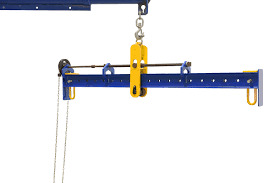
An Adjustable Lifting Beam is a versatile piece of material handling equipment used in construction, manufacturing, warehouses, and heavy industrial operations to safely lift and move loads of varying sizes and weights. Unlike fixed lifting beams, this type of beam allows operators to change the lifting points along its length, making it highly adaptable for different lifting tasks without needing multiple specialized tools.
The Adjustable Lifting Beam is designed to distribute weight evenly across a load, reducing stress on both the lifting equipment and the object being lifted. This improves safety, efficiency, and precision in lifting operations where balance and control are critical. It is commonly used with overhead cranes, hoists, or forklifts depending on the application and configuration.
Understanding the Function of an Adjustable Lifting Beam
The primary function of an Adjustable Lifting Beam is to provide a stable and flexible lifting platform that can be modified to suit different load dimensions. It typically consists of a strong steel beam with multiple adjustable lifting points or hooks that can be repositioned along the beam’s length.
When a load is attached, the beam ensures that the weight is distributed evenly, preventing tilting or shifting during lifting. This is especially important when handling irregularly shaped or off-center loads, where balance can be difficult to maintain using standard lifting slings or fixed spreader bars.
The Adjustable Lifting Beam works by connecting to a crane hook at its center or designated lifting point. From there, the load is attached to adjustable points on either side of the beam. Operators can slide these points closer together or farther apart depending on the size and shape of the load, allowing for maximum flexibility.
Key Features of an Adjustable Lifting Beam
One of the most important features of an Adjustable Lifting Beam is its flexibility. This adjustability eliminates the need for multiple fixed beams, saving both time and cost in industrial operations. It is engineered with high-strength materials, typically structural steel, to withstand heavy loads and harsh working environments.
Another key feature is safety. Many Adjustable Lifting Beam systems come equipped with locking mechanisms that secure the lifting points in place once adjusted. This prevents accidental movement during lifting operations, which could lead to instability or accidents.
Additionally, these beams often include multiple lifting configurations, such as adjustable spreader settings or modular attachments. This makes the Adjustable Lifting Beam suitable for a wide range of applications, from lifting steel structures and machinery to handling large containers and prefabricated components.
Applications in Different Industries
The Adjustable Lifting Beam is widely used across various industries due to its adaptability and reliability. In construction, it is commonly used for lifting steel beams, concrete panels, and heavy structural components. Its ability to adjust to different load sizes makes it ideal for complex construction sites where lifting requirements frequently change.
In manufacturing facilities, the Adjustable Lifting Beam is used to move heavy machinery, equipment, and production materials. It helps ensure safe handling of expensive and sensitive equipment by maintaining proper balance during lifting.
Warehousing and logistics operations also benefit from the use of an Adjustable Lifting Beam. It allows workers to efficiently handle large pallets, containers, and irregularly shaped goods without requiring specialized lifting setups for each load.
In the shipping and offshore industries, these beams are essential for loading and unloading heavy cargo. Their ability to adapt to different load dimensions ensures smooth and safe operations in demanding environments such as ports and oil rigs.
Advantages of Using an Adjustable Lifting Beam
One of the main advantages of an Adjustable Lifting Beam is its versatility. Instead of investing in multiple fixed lifting beams, companies can use a single adjustable system to handle a wide range of lifting tasks. This reduces equipment costs and storage requirements.
Another major benefit is improved safety. By allowing precise load balancing, the Adjustable Lifting Beam minimizes the risk of load shifting or falling during lifting operations. This helps protect both workers and materials from accidents and damage.
Efficiency is also significantly improved. Adjustments can be made quickly, allowing operators to switch between different load sizes without lengthy setup times. This increases productivity in fast-paced industrial environments.
Durability is another advantage. The Adjustable Lifting Beam is built from high-quality materials designed to withstand heavy use and extreme conditions. With proper maintenance, it can provide long-term performance and reliability.
Design and Safety Considerations
When using an Adjustable Lifting Beam, proper design and safety considerations are essential. The beam must be rated for the maximum load it will carry, and operators should never exceed this capacity. Overloading can lead to structural failure and serious accidents.
Regular inspection is also important. Before each use, the Adjustable Lifting Beam should be checked for signs of wear, cracks, or damage to ensure it remains safe for operation. Moving parts, such as adjustable hooks or sliding points, should be kept clean and properly lubricated.
Proper training for operators is another critical factor. Workers must understand how to correctly adjust and use the beam, including how to calculate load distribution and select appropriate lifting points. Incorrect use of an Adjustable Lifting Beam can compromise safety and efficiency.
Difference Between Fixed and Adjustable Lifting Beams
A fixed lifting beam has a set configuration with fixed lifting points, making it suitable for repetitive lifting tasks involving the same load size. In contrast, an Adjustable Lifting Beam offers flexibility by allowing operators to change lifting points based on the load being handled.
This adaptability makes the Adjustable Lifting Beam more suitable for environments where load sizes vary frequently. While fixed beams may be simpler and slightly cheaper, they lack the versatility that modern industrial operations often require.
Conclusion
The Adjustable Lifting Beam is an essential tool in modern material handling, offering flexibility, safety, and efficiency in a wide range of lifting applications. Its ability to adapt to different load sizes makes it a valuable investment for industries such as construction, manufacturing, logistics, and shipping.
By evenly distributing weight and allowing precise adjustments, the Adjustable Lifting Beam enhances operational safety and reduces the need for multiple lifting devices. When used correctly and maintained properly, it provides a reliable and long-lasting solution for handling heavy and complex loads in demanding environments.