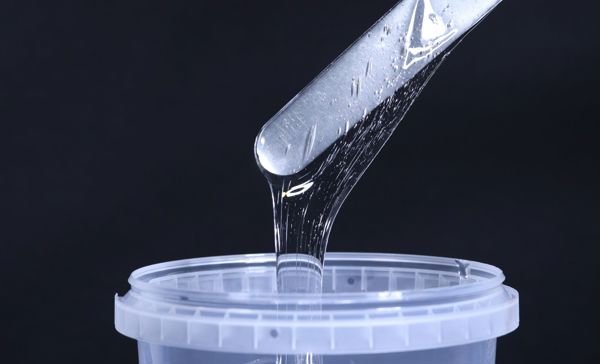
Advanced product development requires manufacturers to balance performance, precision, durability, design flexibility, and production efficiency. As industries develop increasingly sophisticated products, material and manufacturing choices become critical to achieving reliable results. Liquid Silicone Rubber (LSR) Molding has become an important manufacturing process for products that require complex geometries, consistent dimensions, excellent material properties, and scalable production.
LSR is a two-component silicone material that is processed in liquid form and cured inside a mold. The process allows manufacturers to create detailed components with high repeatability while taking advantage of silicone’s flexibility, temperature resistance, chemical stability, and biocompatibility. From medical devices and automotive components to consumer electronics and industrial products, LSR molding can support several stages of modern product development.
Understanding Liquid Silicone Rubber Molding
Liquid Silicone Rubber (LSR) Molding uses two liquid components that are typically mixed in a controlled ratio before being injected into a heated mold. The material then cures rapidly, producing a flexible and durable silicone component.
Unlike some conventional rubber molding processes, LSR processing can provide excellent control over small and intricate parts. Automated injection equipment can deliver precise quantities of material, while carefully engineered molds help maintain dimensional consistency.
This combination of material performance and process control makes LSR suitable for advanced products where traditional manufacturing approaches may present limitations.
Supporting Complex Product Designs
Modern products often include smaller components, intricate features, thin walls, undercuts, and integrated functional elements. These design requirements can make manufacturing more challenging.
Liquid Silicone Rubber (LSR) Molding supports complex geometries because liquid silicone can flow into detailed mold cavities before curing. Proper mold design and process parameters allow manufacturers to reproduce small features accurately.
This capability is especially valuable for products where the component must fit precisely within a larger assembly. Engineers can develop sophisticated shapes without necessarily compromising the functional characteristics expected from silicone materials.
Enabling Miniaturized Components
Product miniaturization is an important trend across electronics, medical technology, automotive systems, and consumer products. As components become smaller, manufacturing tolerances become increasingly important.
LSR processing can be used to produce compact seals, gaskets, protective components, membranes, buttons, and other specialized parts. Its ability to reproduce detailed mold features makes it useful when designers need to combine small dimensions with dependable performance.
Improving Product Performance
Advanced product development is not only about appearance or size. Components must perform consistently under demanding operating conditions. Silicone offers several properties that can contribute to product reliability.
LSR components can remain flexible across a broad temperature range and can provide resistance to moisture, chemicals, and environmental exposure. These characteristics make silicone suitable for applications where conventional materials may deteriorate more quickly.
For example, automotive components may experience heat, vibration, fluids, and changing environmental conditions. Medical products may require materials with specific biocompatibility characteristics. Consumer products may need soft-touch surfaces that remain durable during repeated use.
Maintaining Flexibility and Elasticity
One of the defining characteristics of silicone is its elasticity. Components can deform and return toward their original shape, making the material useful for seals, valves, diaphragms, flexible connectors, and cushioning elements.
This flexibility gives product designers more opportunities to create components that interact with other parts without excessive mechanical stress.
Supporting Rapid Product Development
Speed is another important consideration in modern manufacturing. Companies often need to move from an initial concept to functional prototypes and eventually to mass production within increasingly demanding development schedules.
Liquid Silicone Rubber (LSR) Molding can support this progression by providing a repeatable manufacturing process suitable for detailed production components. Once mold designs and processing parameters are established, manufacturers can produce consistent parts at scale.
The repeatability of the process can also make it easier for development teams to evaluate design changes. Engineers can compare different geometries, material grades, or functional configurations while maintaining controlled production conditions.
Delivering Consistent Quality
Consistency is essential when products contain components that must meet precise specifications. Variations in dimensions, material distribution, or curing can affect how a finished product performs.
Modern LSR molding systems can use automated material metering, mixing, injection, and curing controls. Automation helps reduce variability associated with manual processing and can improve production repeatability.
Manufacturers can also incorporate inspection and quality-control procedures throughout production. Monitoring important process parameters can help identify deviations and maintain consistent component quality.
Reducing Manufacturing Variability
Advanced product development often depends on predictable manufacturing results. A design may perform well during testing, but large-scale production must reproduce the same characteristics repeatedly.
Controlled LSR processing helps bridge the gap between product development and commercial manufacturing. Consistent molding conditions can support reliable dimensional accuracy and material performance across production batches.
Enabling Material and Design Innovation
Product developers increasingly seek ways to combine different functions within a single component. Silicone molding can support innovative approaches such as overmolding and multi-material assemblies.
LSR can be molded around compatible substrates or integrated into assemblies where flexibility, sealing, insulation, or cushioning is required. This can reduce the number of separate components in certain designs.
For example, a rigid plastic component may be combined with a silicone layer to create a softer grip or protective seal. In electronic products, silicone can provide insulation or environmental protection around selected components.
Supporting Functional Integration
Integrating multiple functions into fewer components can simplify product architecture. A single molded silicone component may provide sealing, cushioning, protection, or user interaction depending on its design.
This can help engineers explore more compact product concepts while potentially reducing assembly requirements.
Applications Across Multiple Industries
The versatility of Liquid Silicone Rubber (LSR) Molding makes it relevant to numerous industries. In healthcare, LSR can be used for components such as seals, valves, tubing-related parts, and specialized device components where material performance is important.
In automotive manufacturing, silicone components can support sealing, electrical protection, lighting systems, and other applications exposed to demanding conditions.
Consumer electronics manufacturers can use silicone molding for buttons, protective elements, seals, and soft-touch components. Industrial equipment can also benefit from silicone’s resistance and flexibility in suitable operating environments.
Supporting Scalable Manufacturing
A successful product development process must consider more than the prototype. Manufacturers need a practical route from development to commercial production.
LSR molding can support scalability because automated injection systems are capable of producing repeated components with controlled processing conditions. Once tooling and production parameters have been validated, manufacturers can transition toward higher-volume manufacturing.
Production planning should still consider mold design, cycle time, material usage, equipment capabilities, quality requirements, and expected production volumes.
Improving Production Efficiency
Efficient manufacturing depends on more than fast cycle times. Reducing material waste, minimizing manual intervention, improving consistency, and designing molds for effective production can all contribute to overall efficiency.
LSR processing can support these objectives when the tooling, equipment, material, and production workflow are properly optimized.
Conclusion
Advanced product development demands manufacturing technologies that can accommodate complex designs while delivering dependable performance and repeatable production. Liquid Silicone Rubber (LSR) Molding provides a combination of design flexibility, material performance, precision, and scalability that can support these requirements.
From miniature medical components and automotive seals to consumer electronics and industrial parts, LSR molding gives engineers opportunities to develop products with sophisticated shapes and integrated functions. Its ability to produce consistent silicone components through controlled and automated processes also helps manufacturers move from development concepts toward reliable commercial production.
As product designs continue to become smaller, smarter, and more functionally integrated, LSR molding can remain a valuable manufacturing option for companies seeking to translate advanced engineering concepts into practical, high-quality products.