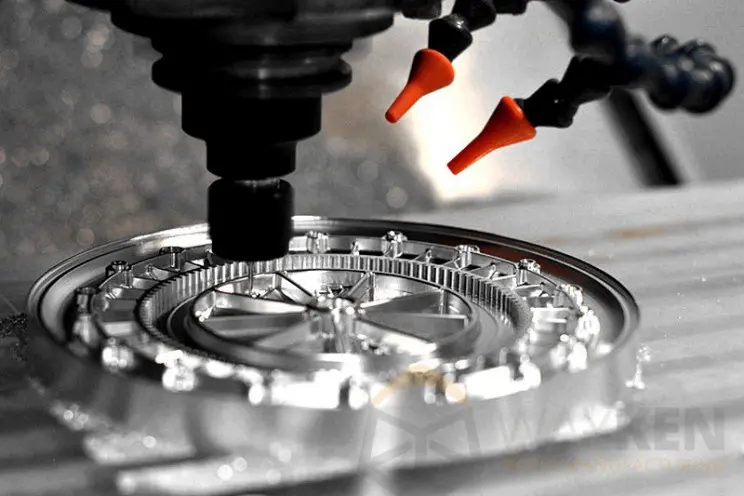
The automotive industry depends on precision, consistency, and efficiency at nearly every stage of vehicle manufacturing. As vehicles become more technologically advanced, manufacturers require production methods capable of creating complex components with extremely tight tolerances. This is where automotive CNC machining has become an important manufacturing technology. Computer numerical control (CNC) machines use programmed instructions to control cutting tools and equipment, allowing manufacturers to produce components with exceptional accuracy and repeatability.
From engine parts and transmission components to suspension systems and specialized electric vehicle components, CNC machining supports a wide range of automotive applications. Modern developments in automation, multi-axis machining, digital monitoring, and advanced cutting tools are making the process faster while improving component quality.
Understanding Automotive CNC Machining
Automotive CNC machining involves using computer-controlled manufacturing equipment to shape raw materials into precisely engineered components. Unlike conventional machining, where operators manually control many machine movements, CNC systems follow digital instructions created through computer-aided manufacturing software.
The process can work with materials such as aluminum, steel, titanium, brass, and various engineering plastics. Depending on the component design, manufacturers may use CNC milling, turning, drilling, grinding, or a combination of machining processes.
One of the biggest advantages of automotive CNC machining is repeatability. Once a validated program has been created, the same component can be manufactured repeatedly with consistent dimensions. This is especially valuable in automotive production, where thousands or even millions of parts may need to meet identical specifications.
Improving Accuracy and Dimensional Consistency
Accuracy is one of the most important requirements in automotive manufacturing. Small dimensional differences can affect how components fit together, operate, or withstand mechanical stress. CNC technology helps manufacturers achieve highly consistent dimensions by controlling tool movements electronically.
Multi-axis CNC machines can move cutting tools along several axes, allowing complex geometries to be produced without repeatedly repositioning the workpiece. This can reduce setup errors and improve overall dimensional consistency.
Advanced CNC systems can also incorporate measurement and inspection technologies. In-process probing, automated measurement, and coordinate measuring machines can help manufacturers identify deviations before large quantities of defective components are produced.
Increasing Production Speed
Automotive manufacturers operate in a highly competitive environment where production speed can directly influence costs and delivery schedules. Modern automotive CNC machining systems are designed to reduce machining time while maintaining quality.
High-speed spindles, optimized cutting paths, automatic tool changers, and advanced tooling allow machines to remove material efficiently. Computer-aided manufacturing software can generate optimized toolpaths that reduce unnecessary movements and improve cycle times.
Automation further increases productivity. CNC machines can be integrated with robotic loading and unloading systems, automated material handling equipment, and production monitoring platforms. These technologies allow manufacturing cells to operate for extended periods with limited manual intervention.
The Role of Multi-Axis CNC Technology
Multi-axis machining has transformed the production of complex automotive components. Traditional three-axis machines are effective for many applications, but five-axis and other advanced systems can approach a workpiece from multiple directions.
This capability is particularly useful for components featuring curved surfaces, deep cavities, angled holes, and intricate geometries. By reducing the number of setups required, multi-axis machining can shorten production times and minimize alignment errors.
Five-axis systems can also improve surface quality because the cutting tool can maintain a more suitable orientation relative to the component. This is valuable for parts that require smooth surfaces and precise contours.
Producing Complex Automotive Components
Modern vehicles contain thousands of components, many of which require specialized manufacturing processes. CNC machining can produce engine housings, brackets, shafts, manifolds, suspension components, brake components, transmission parts, and precision connectors.
The technology is also useful for prototyping. Automotive engineers can create prototype components directly from digital CAD models and evaluate their fit, performance, and manufacturability before committing to large-scale production.
For electric vehicles, CNC machining is increasingly relevant to components such as motor housings, battery-related structures, cooling components, and lightweight structural parts. As vehicle designs evolve, flexible manufacturing technologies become increasingly valuable.
Advanced Materials and Cutting Technologies
Automotive manufacturers are constantly looking for ways to reduce vehicle weight while maintaining strength and durability. This has increased the use of lightweight alloys and advanced engineering materials.
Aluminum alloys, for example, are widely used because they can provide a favorable balance between weight and mechanical performance. However, machining different materials requires appropriate cutting parameters, tooling, cooling, and chip-management strategies.
Modern cutting tools are designed to withstand demanding machining conditions while maintaining sharpness and dimensional stability. Tool coatings and specialized geometries can increase tool life and support efficient material removal.
Coolant and lubrication technologies also play an important role. Proper thermal management can help control heat generation, reduce tool wear, and maintain dimensional accuracy during demanding machining operations.
Automation and Smart Manufacturing
The integration of CNC machining with digital manufacturing systems is changing automotive production. Sensors can monitor machine conditions, spindle loads, temperature, vibration, and tool performance. Manufacturers can use this information to identify potential problems before they result in costly failures.
Predictive maintenance is another important development. Instead of waiting for equipment to fail, manufacturers can analyze machine data to identify signs of wear or abnormal operation. Maintenance can then be scheduled at an appropriate time, helping reduce unexpected downtime.
Connected CNC equipment can also provide production data that managers use to evaluate cycle times, machine utilization, scrap rates, and overall equipment effectiveness. These capabilities contribute to more efficient and data-driven manufacturing operations.
Reducing Waste and Manufacturing Costs
Efficiency in CNC machining is not only about producing components quickly. It also involves minimizing material waste, tool consumption, energy use, and rejected parts.
Optimized toolpaths can reduce unnecessary cutting movements, while accurate machining can decrease scrap caused by dimensional errors. Better process planning can also help manufacturers select suitable cutting conditions and reduce machining time.
For high-volume automotive production, even small improvements in cycle time or material utilization can create significant cost savings over thousands of components.
Quality Control in CNC Production
Quality control remains essential throughout the machining process. Automotive components often have strict dimensional and performance requirements, making inspection an integral part of production.
Manufacturers may use coordinate measuring machines, optical inspection systems, laser measurement equipment, and automated gauging systems to verify component dimensions. Statistical process control can also help identify gradual changes in machining performance.
Consistent inspection provides valuable feedback that can be used to adjust machining parameters and maintain production stability.
Future Trends in Automotive CNC Machining
The future of automotive CNC machining is closely connected with automation, artificial intelligence, digital twins, and advanced manufacturing software. AI-supported systems may help optimize cutting parameters, detect unusual machine behavior, and improve production scheduling.
Digital twins can provide virtual representations of machining processes, allowing manufacturers to simulate operations before production begins. This can help identify toolpath problems, collisions, or inefficient operations in advance.
Additive and subtractive manufacturing may also become increasingly integrated. Hybrid systems can combine material deposition with precision CNC machining, offering greater flexibility for specialized automotive applications.
Conclusion
Automotive CNC machining has become a fundamental technology for producing accurate, reliable, and complex vehicle components. Its combination of computer-controlled precision, repeatability, automation, and flexible material processing makes it suitable for both high-volume production and specialized prototyping.
As automotive designs become more sophisticated and manufacturers seek greater efficiency, CNC machining technologies will continue to evolve. Improvements in multi-axis systems, cutting tools, automation, inspection, and intelligent manufacturing are helping companies achieve higher accuracy, faster production, and better component quality. Together, these developments position CNC machining as an important part of the future of advanced automotive manufacturing.