
Choosing the right forex broker is one of the most important decisions for anyone interested in currency trading. The forex market offers opportunities for beginners and experienced traders, but success depends on several factors, including market knowledge, trading strategies, risk management, and access to reliable trading services. A trustworthy broker provides the tools, technology, and trading conditions necessary to participate in the market efficiently. This is why conducting a thorough forex broker comparison is essential before opening a trading account.
With numerous brokers offering different account types, spreads, platforms, and services, identifying the most suitable option can feel overwhelming. Understanding the key features to evaluate makes the selection process easier and helps traders make informed decisions.
Understanding the Importance of Choosing the Right Forex Broker
A forex broker acts as an intermediary between traders and the currency market. It provides access to trading platforms where users can buy and sell currency pairs, monitor price movements, and manage their positions.
Not all brokers offer the same trading experience. Some focus on competitive pricing, while others emphasize advanced technology, educational resources, or customer support. Selecting a broker without evaluating these differences can lead to unnecessary expenses and an unsuitable trading environment.
A careful evaluation helps traders identify companies that align with their experience levels, financial goals, and preferred trading approaches. It also reduces the likelihood of choosing a broker with unclear policies or unreliable services.
Important Factors to Consider When Comparing Forex Brokers
Regulatory Status and Security
Regulation should be one of the first considerations when evaluating a forex broker. Financial regulatory authorities establish standards designed to protect clients and promote transparent business practices.
Before registering, traders should verify whether the broker is authorized by a recognized financial regulator. They should also confirm that the license belongs to the actual company operating the trading account rather than relying solely on a regulatory logo displayed on a website.
Additional security measures may include segregated client funds, secure account authentication, transparent withdrawal procedures, and clear dispute-resolution policies.
Choosing a properly regulated broker does not eliminate trading risks, but it provides an additional level of oversight and accountability.
Trading Costs and Spreads
Trading costs directly influence a trader’s overall expenses. Two important factors are spreads and commissions.
The spread represents the difference between the buying and selling prices of a currency pair. Brokers may offer fixed or variable spreads, depending on their pricing structures and market conditions.
Some brokers advertise very low spreads but charge separate commissions on each transaction. Others incorporate their compensation into wider spreads.
A meaningful forex broker comparison should examine the complete trading cost rather than focusing on advertised spreads alone. Traders should also consider overnight financing charges, currency conversion fees, inactivity fees, and withdrawal expenses.
Understanding these costs helps traders estimate their potential expenses more accurately.
Available Trading Platforms
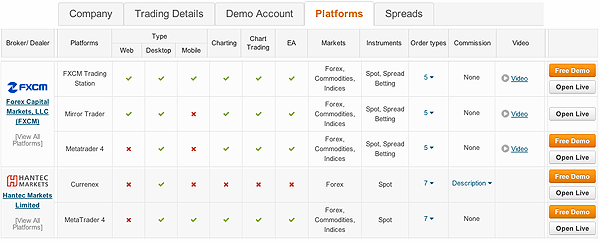
A reliable trading platform makes it easier to analyze markets, execute orders, and manage positions. Different brokers support different platforms, so traders should consider which technology best matches their requirements.
Popular platforms often provide features such as:
- Real-time currency price charts.
- Technical indicators and drawing tools.
- Multiple order types.
- Automated trading capabilities.
- Customizable trading interfaces.
- Account performance reports.
The platform should be stable, responsive, and easy to navigate. Beginners may prefer straightforward interfaces, while experienced traders might require advanced charting and automated trading functionality.
Testing a demo account can help users understand the platform before committing real money.
Comparing Account Types and Trading Conditions
Minimum Deposit Requirements
Forex brokers establish different minimum deposit requirements depending on their account structures. Some offer accounts with relatively low starting balances, while others require larger initial investments.
A low minimum deposit can make trading more accessible, particularly for beginners who want to understand the market without committing substantial capital.
However, the minimum deposit should not be the only deciding factor. Traders should examine the account’s spreads, commissions, available instruments, and withdrawal requirements.
It is important to trade only with money that one can afford to lose.
Leverage and Margin Requirements
Leverage allows traders to control larger positions using a smaller amount of capital. Although this can increase market exposure, it also magnifies potential losses.
For example, high leverage may allow a trader to open a position worth significantly more than the funds available in their account. However, even a relatively small market movement can create substantial losses.
When comparing brokers, users should review maximum leverage, margin requirements, margin-call procedures, and negative balance protection where available.
A responsible broker should explain these conditions clearly rather than presenting high leverage as an automatic advantage.
Range of Available Trading Instruments
Although forex trading primarily involves currency pairs, many brokers also provide access to other financial instruments, depending on their regulatory permissions and business models.
These may include commodities, indices, metals, and contracts for difference.
Traders interested in multiple markets should evaluate the available instruments and understand the risks associated with each product. They should also check whether the broker offers sufficient market information and competitive trading conditions.
Evaluating Customer Support and Educational Resources
Responsive Customer Service
Reliable customer support becomes particularly important when traders encounter account-related problems, technical difficulties, or questions about transactions.
A good broker should provide accessible support through suitable communication channels, such as live chat, email, or telephone.
Response quality matters as much as availability. Representatives should provide accurate information, explain procedures clearly, and handle complaints professionally.
Before opening an account, traders can test customer service by asking questions about deposits, withdrawals, account verification, and trading conditions.
Learning Materials for Beginners
Educational resources can help new traders understand the forex market and develop better trading habits.
Useful materials may include video tutorials, trading guides, webinars, market analysis, and explanations of technical and fundamental analysis.
Some brokers also provide demo accounts that allow beginners to practice using virtual funds.
These resources are valuable because forex trading involves financial risks that cannot be eliminated through platform selection alone. Traders should develop their knowledge before moving toward more advanced strategies.
Deposit and Withdrawal Options
Financial transactions are another important part of the broker selection process. Traders should review available payment methods, processing times, transaction limits, and applicable charges.
A trustworthy broker should publish clear deposit and withdrawal policies. The account holder should also understand identity verification requirements and any restrictions that may apply to particular payment methods.
Checking independent customer feedback can provide additional insight into transaction experiences. However, individual reviews should be evaluated carefully because online feedback may not always represent the overall quality of a company.
Common Mistakes to Avoid When Comparing Forex Brokers
Traders sometimes make decisions based on promotional offers rather than examining the broker’s complete services. This can result in choosing an unsuitable provider.
Several common mistakes should be avoided:
- Selecting a broker only because it offers high leverage.
- Ignoring regulatory information and company ownership.
- Comparing advertised spreads without calculating total trading costs.
- Overlooking withdrawal conditions and account fees.
- Choosing complicated platforms without understanding their features.
- Trusting unrealistic profit promises or guaranteed-return claims.
Taking time to investigate these details can prevent unnecessary complications and support more responsible trading decisions.
Creating a Practical Forex Broker Comparison Checklist
A structured checklist makes it easier to evaluate several brokers objectively. Traders can record important details for each provider and compare them according to their individual priorities.
Useful comparison categories include regulatory authorization, account security, spreads, commissions, platform availability, minimum deposits, leverage, available instruments, customer support, and withdrawal policies.
A demo account can also help determine whether the trading environment meets expectations.
Rather than automatically selecting the broker with the lowest costs or the largest number of features, traders should identify the provider that offers a suitable balance of reliability, transparency, usability, and trading conditions.
Conclusion
Finding a suitable trading partner requires more than choosing a broker with attractive advertisements or competitive spreads. Traders need to understand the services offered, investigate regulatory credentials, evaluate trading expenses, and examine the quality of available platforms and customer support.
A detailed forex broker comparison provides a practical foundation for making informed decisions. By considering security, pricing, account conditions, educational resources, and transaction policies, traders can narrow their choices and identify a broker that matches their requirements.
Ultimately, selecting a reliable broker is an important part of building a responsible trading approach. Combined with continuous education, realistic expectations, and effective risk management, careful broker research can help traders establish a more informed and organized trading experience.