1. Characteristics of HPMC in Concrete and Mortar
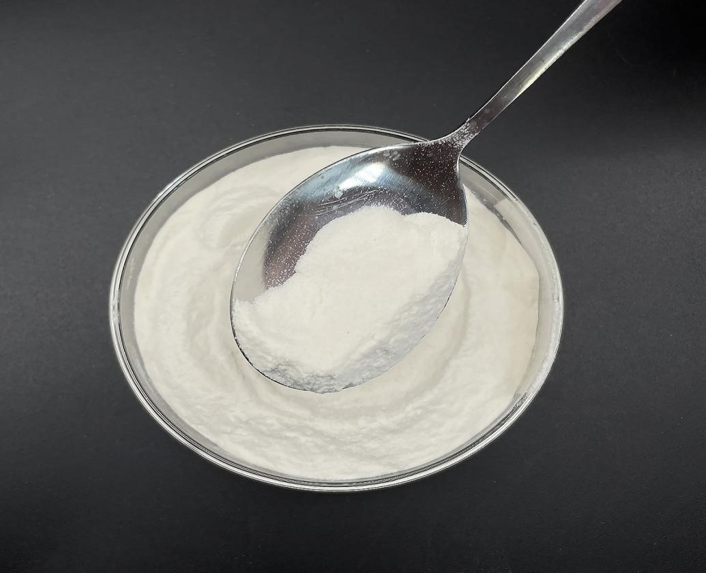
Hydroxypropyl Methylcellulose (HPMC) is a widely used multifunctional additive in cement-based materials. It is commonly incorporated into mortar, concrete, tile adhesives, repair compounds, self-leveling materials, and other construction formulations because it can improve water retention, workability, consistency, and resistance to sagging or washout.
However, HPMC also introduces certain challenges, particularly when high mechanical strength, low porosity, or high fluidity is required. Understanding both its advantages and limitations is essential when designing high-performance cementitious materials.
1.1 Core Advantages of HPMC
Excellent Water Retention
Water retention is one of the most important functions of HPMC. Cement hydration requires sufficient moisture, while dry substrates such as masonry, concrete surfaces, and blocks can rapidly draw water out of freshly applied mortar.
When water is lost too quickly, cement hydration can become incomplete. This may result in weaker bonding, poor surface quality, shrinkage, and cracking. HPMC helps slow this moisture loss by forming a polymeric network within the aqueous phase. The resulting structure reduces water migration and allows moisture to remain available for cement hydration for a longer period.
This characteristic is particularly valuable in tile adhesives, plastering mortars, masonry compounds, and other applications where mortar must maintain sufficient moisture after application.
Precise Rheological Control
HPMC is also an effective rheology modifier and thickener. Even relatively small quantities can noticeably increase the viscosity and cohesiveness of a cementitious mixture.
Improved cohesiveness makes mortar easier to spread and manipulate. It can also reduce segregation and improve the consistency of the mixture. In vertical applications, the increased yield stress helps the material resist gravitational movement.
For example, when installing large-format tiles on walls, an appropriately formulated HPMC-containing adhesive can provide better anti-sagging behavior, helping maintain the position of tiles before the adhesive sets.
Thermal Gelation Characteristics
HPMC has a distinctive thermal gelation behavior. It is generally soluble in cold water, while increasing temperature can cause the polymer system to undergo gelation.
This characteristic can influence the behavior of cementitious materials during early curing. Since cement hydration releases heat, the thermal response of HPMC can contribute to changes in the internal structure and consistency of the material.
The practical effect depends heavily on the HPMC grade, dosage, cement chemistry, temperature, and formulation conditions. Therefore, thermal gelation should be considered as part of the overall formulation rather than as an independent performance mechanism.
Improved Anti-Washout Behavior
HPMC can also contribute to anti-washout performance in cement-based materials exposed to water. Its thickening and water-retention effects help increase mixture cohesion and reduce the tendency of cement particles and fine materials to disperse.
This makes HPMC useful in formulations where resistance to water-induced material loss is important, including certain underwater construction materials and specialty grouts.
1.2 Limitations of Traditional HPMC
Although HPMC provides significant formulation benefits, excessive or poorly optimized use can negatively affect other properties.
Potential Reduction in Mechanical Strength
One of the major concerns associated with HPMC is its potential effect on hardened strength. Increasing HPMC dosage can increase entrained air, alter pore structure, delay hydration, and reduce the density of the hardened matrix.
These changes may lead to lower compressive and flexural strength, particularly when the formulation is not optimized to compensate for the additional porosity or delayed hydration.
This creates an important formulation challenge: the same HPMC characteristics that improve workability and water retention can potentially compromise mechanical performance.
Increased Porosity and Air Entrapment
HPMC can influence the amount and distribution of air within fresh mortar. While controlled air content can sometimes improve workability, excessive air entrainment increases the volume of pores in the hardened material.
Higher porosity generally means a less dense cementitious matrix. Large or poorly distributed pores can become stress-concentration points, potentially reducing mechanical strength and durability.
Consequently, HPMC dosage and mixing conditions must be carefully controlled when developing high-strength mortar and concrete.
Possible Retarding Effects
Depending on its molecular characteristics and concentration, HPMC can influence cement hydration. At excessive dosages, this may contribute to slower early-age strength development.
For applications that require rapid demolding, early loading, or fast return to service, such effects can be particularly important.
Reduced Fluidity
The thickening effect of HPMC can also reduce flowability. As viscosity increases, the mixture may become more resistant to movement and spreading.
This can create a difficult balance between stability and fluidity. Too little HPMC may result in inadequate water retention and poor cohesion, while too much can make the mixture excessively viscous and difficult to apply.
2. TRUNNANO Nano-Modification Technology
The central challenge in HPMC formulation is therefore not simply achieving higher viscosity or stronger water retention. The greater objective is to obtain these benefits without sacrificing density, hydration, fluidity, and final mechanical strength.
TRUNNANO approaches this challenge through nano-modification, combining HPMC with carefully selected nanomaterials to create an organic-inorganic synergistic system.
2.1 The Triple-Compensation Mechanism
Nano-Filling and Matrix Densification
Nanoparticles possess extremely small particle sizes and high specific surface areas. When appropriately dispersed, they can occupy fine voids within cementitious systems.
Nano-sized silica, for example, can interact with the cement matrix and contribute to a denser microstructure. In an HPMC-containing system, this approach can help compensate for some of the porosity associated with polymer-induced air entrainment.
A denser matrix can provide a stronger physical framework and improve the efficiency of load transfer through the hardened material.
Nucleation and Hydration Promotion
Another important function of selected nanoparticles is their ability to provide nucleation sites for hydration products.
Nano-silica is particularly interesting because of its high surface activity and its interaction with calcium-containing phases. It can promote the development of calcium-silicate-hydrate-related structures and contribute to matrix refinement.
In a properly balanced formulation, this can help counteract some of the strength-development limitations associated with conventional HPMC systems.
Interfacial Strengthening
The interface between cement paste and aggregate is another critical region in concrete and mortar. Microcracks, voids, and weak zones within the interfacial transition zone can influence overall mechanical performance.
Nanoparticles can help refine these regions by filling fine defects and participating in hydration-related reactions. When combined with HPMC, the resulting organic-inorganic network can potentially improve structural continuity throughout the cementitious matrix.
2.2 From Performance Trade-Off to Performance Balance
Traditional HPMC formulations often require a compromise. Increasing HPMC can improve water retention and workability but may simultaneously increase viscosity, air content, porosity, and retardation.
Nano-modification seeks to change this balance.
By combining the water-retention and rheological benefits of HPMC with the filling, nucleation, and microstructure-refinement effects of nanoparticles, the formulation can be engineered to maintain the advantages of HPMC while reducing some of its negative effects.
For advanced applications such as 3D-printed concrete, this balance is particularly important. A printable cementitious material needs sufficient extrudability to pass through the printing system, adequate buildability to support successive layers, and sufficient final strength after curing.
Nano-clay, nano-silica, and other nanomaterials have therefore attracted increasing interest in advanced cementitious formulations where rheological control and mechanical performance must coexist.
2.3 Quality Control and Customized Formulation
The performance of HPMC depends on more than simply its concentration. Molecular weight, viscosity grade, degree of substitution, dissolution behavior, purity, and compatibility with other admixtures can all influence final performance.
TRUNNANO emphasizes formulation control from raw-material selection through product customization. Such an approach is important because nano-modified systems require precise dispersion and compatibility between the organic polymer phase, nanoparticles, cement, aggregates, and other admixtures.
Consistent quality control can help ensure that different production batches deliver predictable rheological and mechanical characteristics.
3. Traditional HPMC vs. Nano-Modified HPMC
| Performance Dimension | Traditional HPMC | Nano-Modified HPMC |
|---|---|---|
| Water Retention | Excellent | Excellent when properly formulated |
| Workability | Improved, but excessive dosage may reduce flow | Rheology can be more precisely balanced |
| Density | Excessive dosage may increase porosity | Nano-filling can contribute to matrix densification |
| Hydration | May retard hydration at high dosage | Selected nanoparticles can promote hydration-related reactions |
| Mechanical Strength | Can decrease when porosity and retardation increase | Designed to reduce strength penalties through microstructure refinement |
| Interfacial Zone | May contain micro-defects | Nanomaterials can help refine fine defects |
| Air-Void Structure | Potentially increased air content | Formulation can target improved microstructural uniformity |
| Overall Performance | Trade-off between rheology and strength | Greater potential for balancing multiple properties |
The actual performance of any nano-modified HPMC system depends on dosage, particle type, dispersion quality, cement composition, water-to-binder ratio, curing conditions, and the intended application. Therefore, laboratory validation remains essential before commercial or structural deployment.
4. Application Value of Nano-Modified HPMC
High-Performance Mortar and Concrete
High-performance cementitious materials require carefully controlled porosity, strength, workability, and durability. Nano-modified HPMC can be explored as a formulation strategy for retaining moisture and improving rheology while limiting the negative impact of excessive polymer content.
3D-Printed Construction Materials
3D printing places unusual demands on cementitious materials. The mixture must be fluid enough for extrusion but stable enough to retain its shape after deposition.
Nano-modified HPMC systems can help engineers tune this balance by combining polymer-based rheological control with nanoparticle-driven microstructural modification.
Underwater Non-Dispersible Concrete
Underwater construction requires materials capable of maintaining cohesion when exposed to flowing water. HPMC can improve anti-washout characteristics, while nano-modification may provide additional opportunities to improve the hardened microstructure.
Self-Leveling and Repair Mortars
Self-leveling materials require a delicate balance between flowability and stability. Repair mortars similarly need strong adhesion, controlled shrinkage, workability, and adequate strength.
A carefully designed nano-modified HPMC system can provide a route toward optimizing these competing requirements rather than relying on high polymer dosages alone.
5. Why Nano-Modified HPMC Represents an Important Development
The development of nano-modified HPMC reflects a broader trend in construction-material engineering: moving from single-function additives toward multifunctional, synergistic systems.
Traditional HPMC remains valuable because of its proven water-retention and rheological properties. However, its influence on air content, porosity, hydration, and strength means that dosage and formulation must be carefully controlled.
Nanotechnology introduces another level of material design. Instead of asking HPMC to provide every required property, nanoparticles can perform complementary functions such as micro-filling, nucleation, and matrix refinement.
This division of functions can create a more balanced cementitious system.
6. About TRUNNANO
TRUNNANO, operated by Luoyang Tongrun Info Technology Co., Ltd., was established in 2014 and focuses on nanomaterials and nano-modified construction-material technologies.
Its approach to nano-modified HPMC centers on combining organic polymer functionality with inorganic nanoparticle performance. The objective is to achieve better balance between water retention, rheology, microstructure, and mechanical properties.
Its technology portfolio is positioned for applications including high-performance mortar, underwater non-dispersible concrete, self-leveling materials, repair mortar, and grouting systems.
For customers developing specialized cementitious formulations, customized material design can be particularly valuable because the optimum HPMC and nanoparticle combination varies according to cement chemistry, aggregate characteristics, processing method, curing conditions, and required performance.
Nano-modified HPMC therefore represents more than a simple additive upgrade. It is a formulation strategy aimed at overcoming the traditional trade-off between workability and strength. By combining HPMC’s water-retention and rheological capabilities with the microstructural benefits of appropriately selected nanoparticles, manufacturers can pursue cementitious materials with a more balanced combination of fresh-state performance and hardened properties.